


TIME:2026-06-26
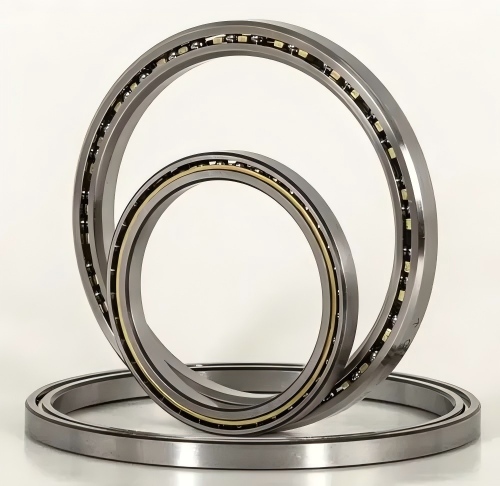
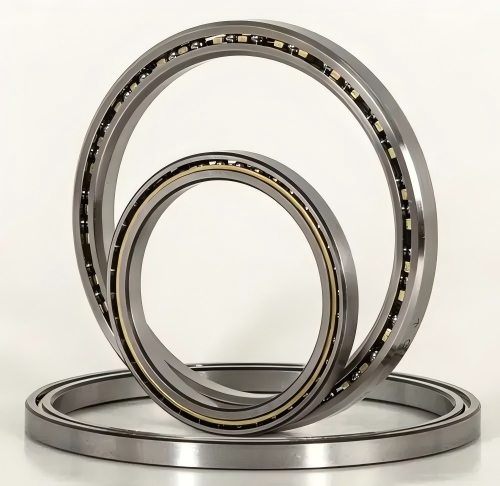
Industrial robots prioritize lightweight design, small size, high rigidity, high precision, and low moment of inertia. Thin-walled bearings are a core component in these robots, with two main types being equal-section thin-walled ball bearings and crossed roller thin-walled bearings, covering all joints and rotating components.
Key Advantages of Thin-Walled Bearings
1. Extremely Small Radial Dimensions and Compact Structure: With the same inner diameter, the outer diameter is much smaller than standard bearings, significantly reducing the size of robot joints and achieving miniaturization and integration.
2. Lightweight and Low Moment of Inertia: The thinner ring wall thickness results in significant weight reduction; joint start-stop and swing response are faster, improving dynamic performance.
3. Strong Adaptability of Hollow Shafts: The equal-section structure is easy to manufacture into hollow shafts, allowing cables, oil pipes, and signal lines to pass through internally, resulting in neat wiring and good protection.
4. Composite Load Bearing and Simplified Assembly: Four-point contact and crossed roller bearings can simultaneously withstand multi-directional loads, reducing the number of bearings and lowering assembly errors and failure rates.
5. High precision and low runout: Mostly P4/P5 precision grades are used to ensure the robot's repeatability and positioning accuracy, meeting the requirements of precision operations such as welding, handling, and assembly.

Tel:+86-635-8550888
Add:Precision Bearing Industrial Park in Guantao County, Hebei Province


